 Skip to content
Pulmonology Endoscopy Cart Solutions for Bronchoscopy Systems
TL;DR – Pulmonology Endoscopy Cart Requirements
- Pulmonology (bronchoscopy) systems focus on precise airway procedures where positioning and visibility are critical
- Typical setups include bronchoscope, processor, light source, monitor, and a flexible cart system
- These environments require adjustable monitor positioning, compact layout, and smooth mobility
- Poor cart design can lead to unstable positioning, limited visibility, and inefficient operation
- Flexible, precision-oriented cart configurations
- Compact setups designed for bronchoscopy environments
What is a bronchoscopy?
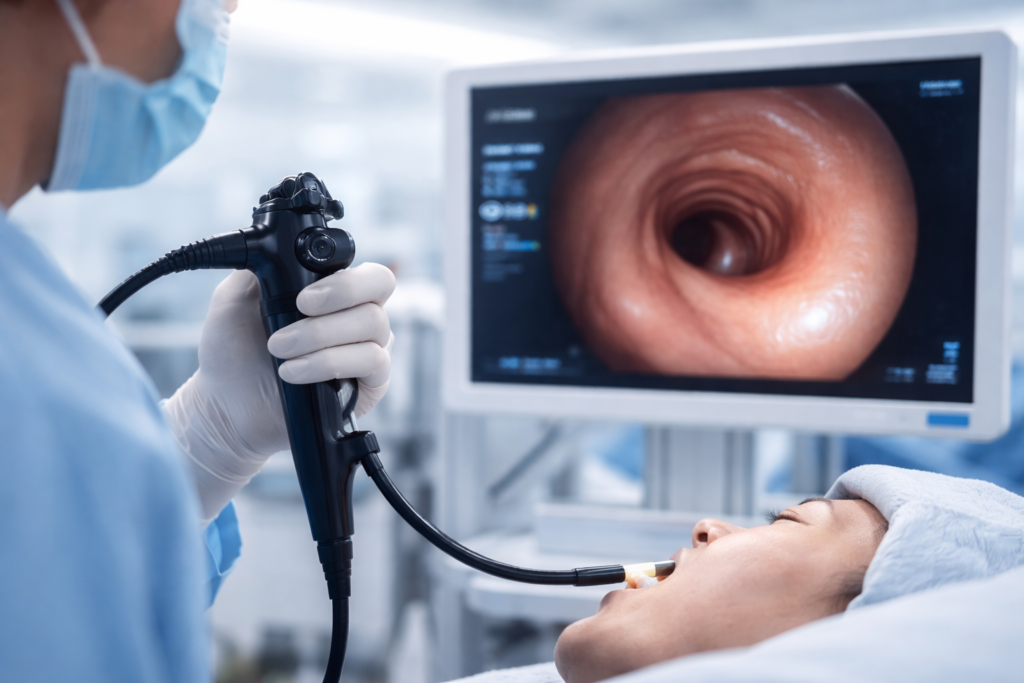
Pulmonology endoscopy (bronchoscopy) is a minimally invasive procedure that uses a flexible, camera-equipped scope to examine the airways.
In real clinical use, it is not a single device, but a coordinated setup where multiple devices work together:
• Bronchoscope
• Video processor
• Light source
• Monitor
• Supporting cart
This creates a precision-oriented system where positioning accuracy, visibility, and flexible adjustment are essential for stable operation.
System Setup Overview
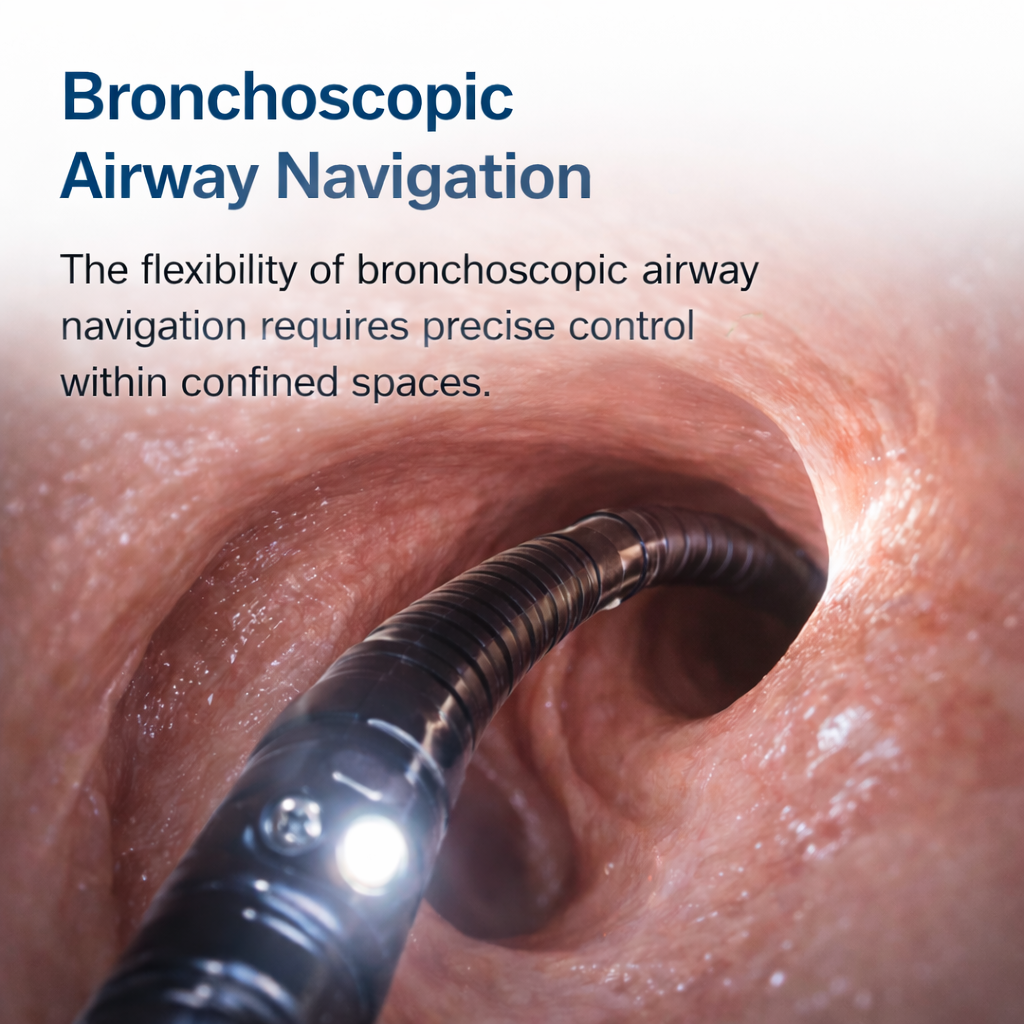
Bronchoscope
Flexible scope for airway navigation
Requires precise control in narrow spaces

Video Processor
Processes real-time signals
Ensures stable and clear image output

Light Source
Provides consistent illumination
Supports visibility in confined airways
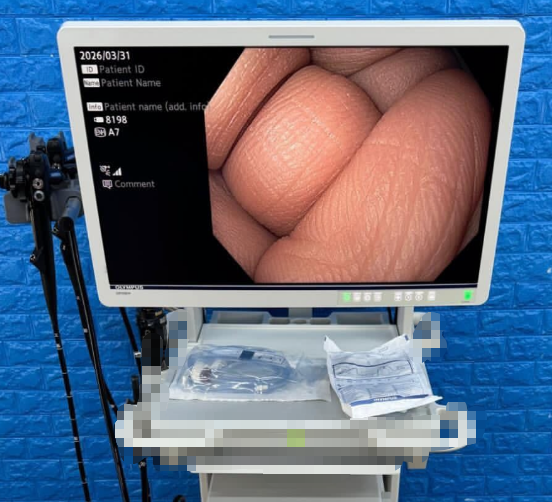
Monitor
Displays live images
Adjustable for optimal viewing angles
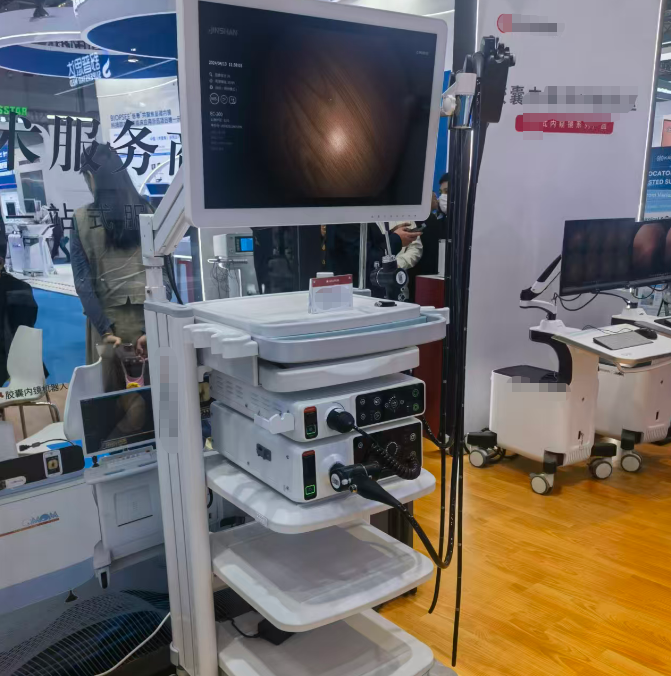
Cart (Core System Support)
Supports and organizes all devices
Enables precise positioning and smooth movement
Together, these components form a coordinated workflow:
The bronchoscope navigates → the processor converts → the light source illuminates → the monitor displays → and the cart enables positioning and system control.
The cart is not just a support structure — it directly affects positioning accuracy, mobility, and overall system usability in pulmonology environments.
What Makes Pulmonology Endoscopy Systems Different?
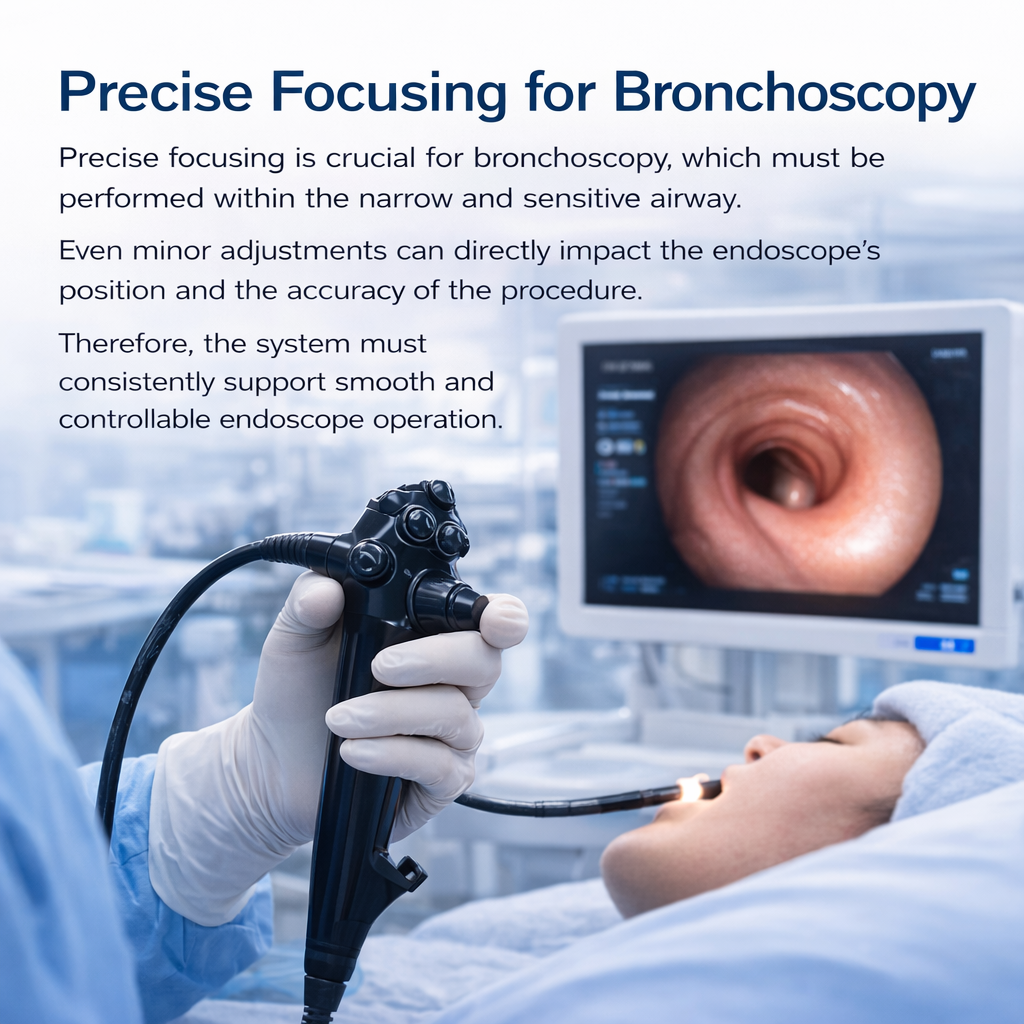
1. Precision-Focused Operation
- Bronchoscopy involves navigating narrow and sensitive airway structures.
- Small adjustments can directly affect scope positioning and procedural accuracy.
- The system must support smooth and controlled scope manipulation at all times.
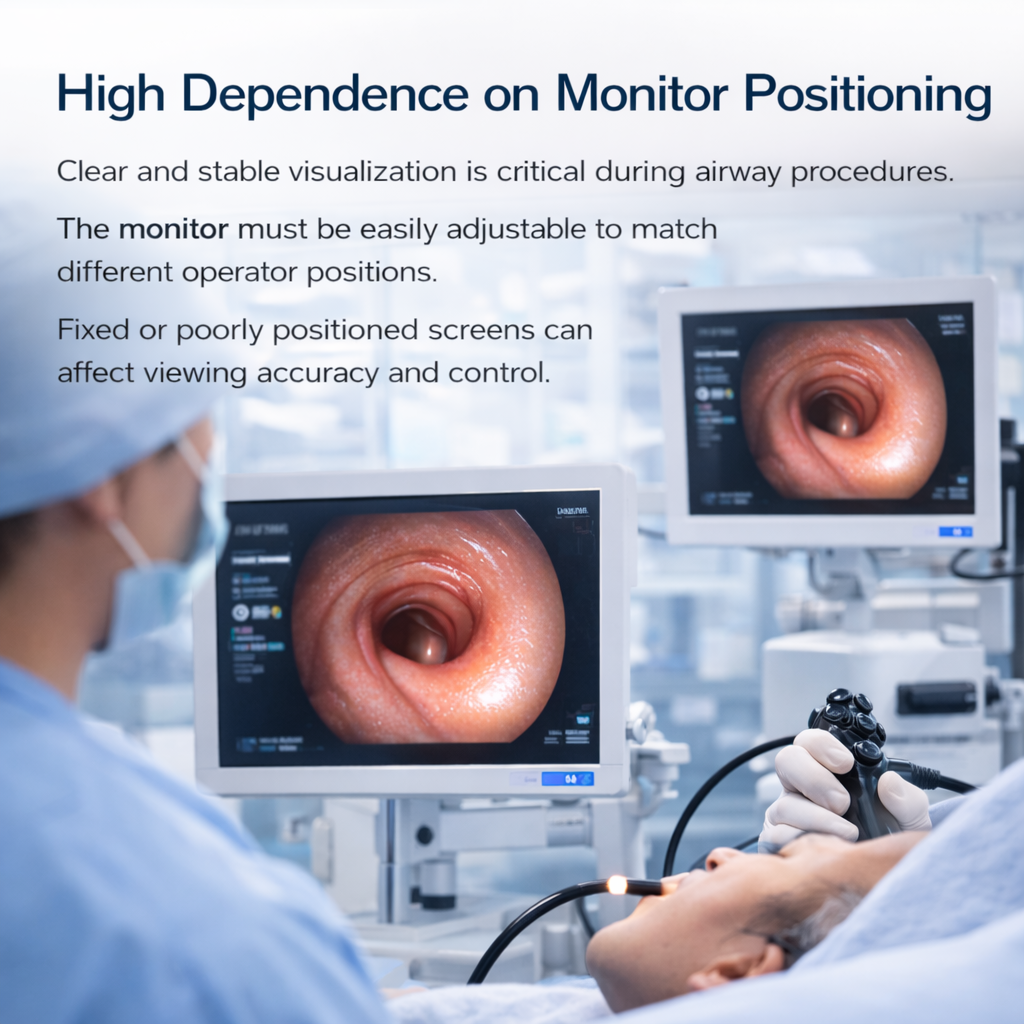
2. High Dependence on Monitor Positioning
- Clear and stable visualization is critical during airway procedures.
- The monitor must be easily adjustable to match different operator positions.
- Fixed or poorly positioned screens can affect viewing accuracy and control.
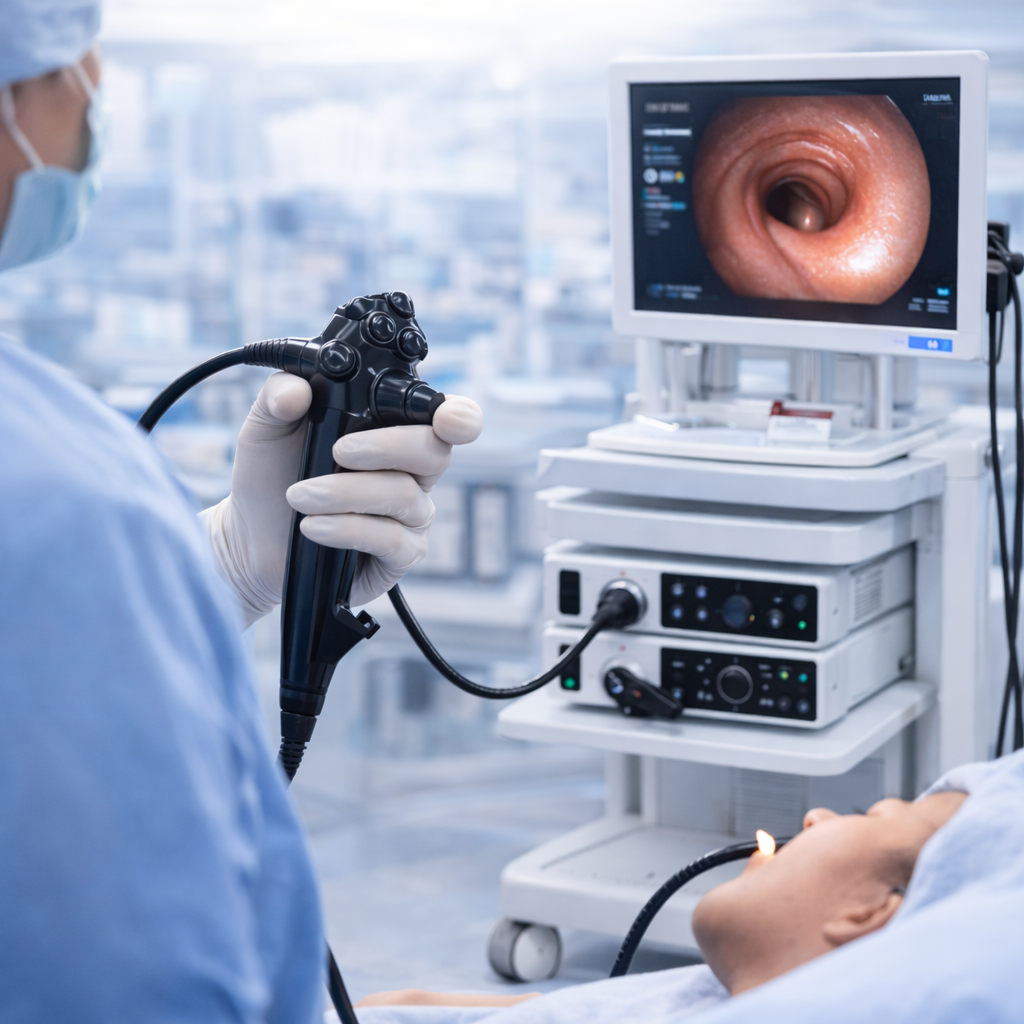
3. Lightweight Equipment with Stability Requirements
- Pulmonology systems typically involve fewer and lighter devices.
- Stable support is still required for precise scope control.
- Even slight instability can affect maneuverability and viewing accuracy.
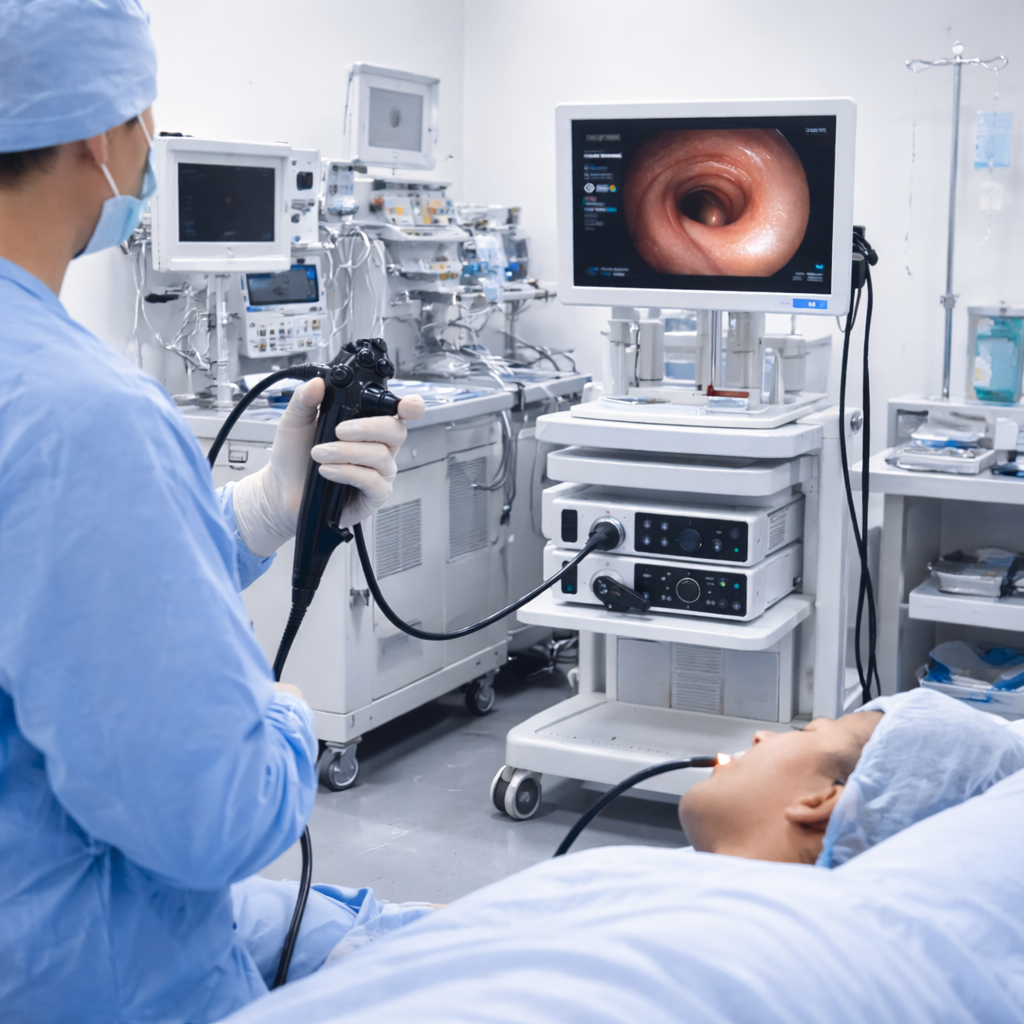
4. Flexible Setup in Confined Spaces
- Bronchoscopy is often performed in compact or multi-use rooms.
- The system must allow easy repositioning without interrupting the procedure.
- Compact and flexible layouts are essential for efficient operation.
5. Mobility and Positioning Control
- The system must move smoothly while maintaining overall balance.
- Precise positioning is required to support controlled scope manipulation.
- Poor mobility can interfere with positioning accuracy and workflow continuity.

Compared to GI or surgical setups:
Pulmonology endoscopy systems place greater emphasis on positioning accuracy, flexible movement, and precise control in confined environments.
What Challenges Do Buyers Face in Pulmonology Systems?

Monitor Positioning Limitations
Reduces viewing accuracy and procedural control
In bronchoscopy, the viewing angle directly affects how the scope is guided.
If the monitor cannot be easily adjusted, operators may struggle to maintain a clear and stable view — impacting positioning accuracy and overall control.

Unstable Cart Movement
Affects scope stability and positioning precision
Pulmonology procedures often require small, controlled movements.
If the cart shifts or lacks stability, even slight movement can interfere with scope manipulation and reduce precision.

Limited Space Constraints
Restricts movement and setup flexibility
Bronchoscopy is frequently performed in compact or shared rooms.
Oversized or poorly structured carts can limit mobility and make positioning more difficult during procedures.

Cable Interference
Disrupts movement and operational flow
Multiple connected devices can create cable interference in a limited space.
Without proper routing, cables may obstruct movement or affect positioning during procedures.

Poor System Positioning Design
Leads to inefficient and inconsistent operation
If devices are not positioned logically, operators may need to repeatedly adjust their setup.
This can interrupt workflow and reduce efficiency during bronchoscopy procedures.
What Type of Cart Works Best for Pulmonology Applications?
Not all standard carts are suitable for bronchoscopy workflows.
Pulmonology setups require precise positioning, smooth control, and flexible operation in confined clinical environments.

Lightweight Structure → Enables Precise Control
- Easier to reposition during procedures
- Reduces resistance when making fine adjustments
- Supports smooth and controlled scope navigation

Stable Base → Maintains Positioning Accuracy
- Prevents unwanted movement during operation
- Keeps equipment steady in delicate procedures
- Improves overall control and user confidence
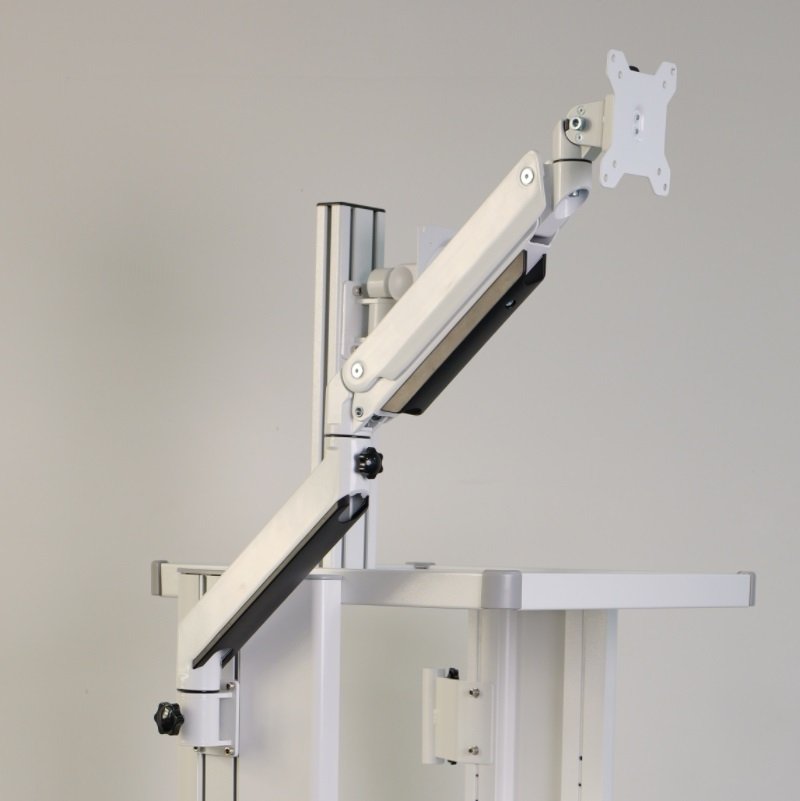
Monitor Arm → Critical for Visualization
- Allows quick adjustment of viewing angle and height
- Supports different operator positions during procedures
- Ensures consistent visibility in narrow airway navigation
Compact Design → Fits Limited Space
- Suitable for small or shared bronchoscopy rooms
- Improves mobility without blocking movement
- Makes positioning more flexible during procedures

Cable Management → Prevents Interference
- Keeps cables organized in tight working areas
- Reduces obstruction during scope manipulation
- Improves safety and operational flow
Recommended Setup Direction (Guidance, Not Selection)
This guide helps you identify a suitable setup direction based on real bronchoscopy workflow conditions.
It does not replace detailed configuration selection.
Suggested Direction Based on Pulmonology Workflow Scenarios
| Your Situation | Typical Pulmonology Scenario | Suggested Direction |
|---|---|---|
| Small bronchoscopy room | Limited space, basic bronchoscopy procedures | Compact and highly mobile cart with flexible positioning |
| Standard pulmonology room | Routine bronchoscopy with moderate frequency | Stable cart with adjustable monitor arm and smooth mobility |
| High-precision procedures | Fine airway navigation, positioning-sensitive tasks | Precision-focused setup with enhanced stability and control |
| Hospital respiratory unit | Multiple rooms, varying procedure types | Flexible cart system adaptable to different room layouts |
| Distributor / OEM project | Custom respiratory or bronchoscopy solutions | Application-specific customization based on workflow and space constraints |
How to Choose the Right Direction
- Focus on positioning accuracy, not just device capacity
- Consider how often repositioning is required during procedures
- Prioritize monitor adjustability and movement control
- Ensure the cart fits within limited or shared clinical spaces
Most bronchoscopy setups require a balance between mobility, precision, and space efficiency.
How to Customize for Your Pulmonology Setup
Most bronchoscopy setups require some level of customization to ensure precise control, flexible positioning, and efficient operation in limited spaces.
What Usually Needs to Be Customized
Monitor Positioning
- Bronchoscopy requires precise visual guidance during airway navigation
- If the monitor position is fixed → reduced visibility and lower positioning accuracy
Cart Mobility & Stability
- Procedures often involve small, controlled movements
- If the cart is too rigid → difficult to reposition
- If too loose → affects control and stability
Compact Layout
- Bronchoscopy rooms are often space-limited or shared
- If layout is not optimized → restricted movement and inefficient operation
Cable Management
- Multiple devices operate within a confined space
- If cables are unmanaged → interference, obstruction, and reduced workflow efficiency
Device Positioning
- Equipment needs to be placed within easy reach and logical workflow order
- Poor positioning → repeated adjustments and disrupted operation
Simple Rule
If your setup involves bronchoscopy procedures that require precise positioning and frequent adjustment,
a standard cart is usually not enough.
Tell us your bronchoscopy setup — we can help define a suitable pulmonology configuration.
FAQ – Pulmonology Endoscopy Cart Setup
However, bronchoscopy procedures require precise positioning, stable control, and flexible monitor adjustment — which standard carts often cannot fully support.
These factors directly affect workflow and positioning accuracy.
Even small movements can affect scope control during airway navigation, making stability critical for maintaining precision.
However, layout, mounting, and cable routing may need adjustment to ensure proper positioning and smooth operation.
