 Skip to content

Choosing the wrong cart can slow down flexible endoscopy work. Cables become messy, devices sit poorly, and daily movement becomes risky. I choose carts by workflow first.
An endoscopy cart for flexible endoscopy systems should match the equipment layout, room workflow, mobility needs, cable routing, monitor position, cleaning requirements, and future accessory expansion. The right cart is not only a trolley. It is a mobile workstation for GI, bronchoscopy, ENT, and mixed flexible endoscopy procedures.

Many buyers first compare shelf size, caster quality, and price. These factors matter, but the better starting point is the daily workflow: how the flexible endoscopy system will move, connect, store, and support procedures. Once the workflow is clear, choosing the right cart becomes much easier.
What Is a Flexible Endoscopy System?
Many buyers only see the endoscope, but the real system is larger. If the cart cannot support the whole setup, the workflow becomes messy and unsafe.
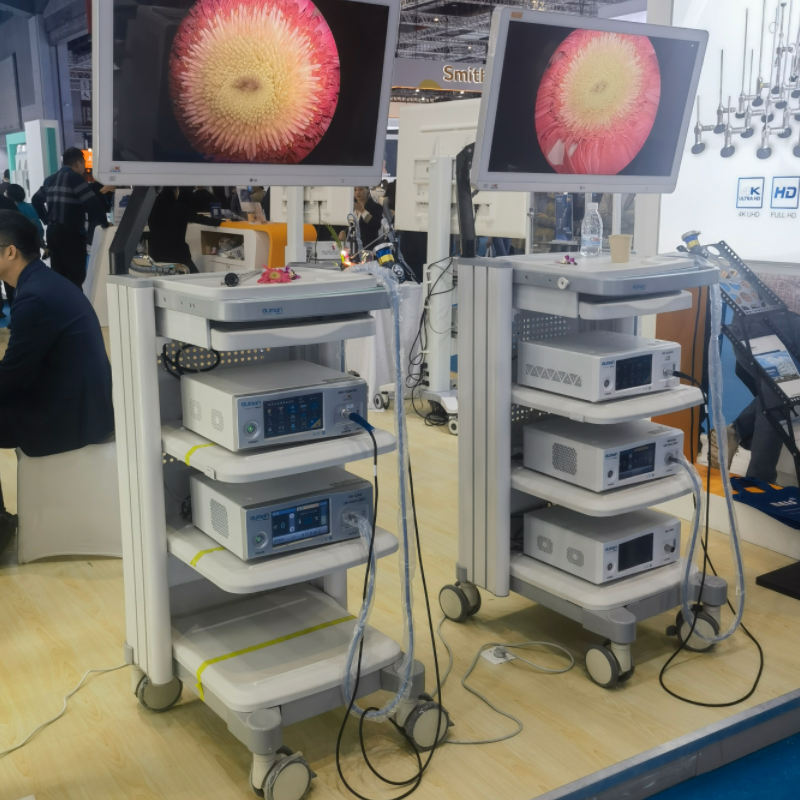
A flexible endoscopy system usually includes a flexible scope, processor, light source, monitor, water bottle, suction support, cables, power supply, and sometimes recording or auxiliary devices. The cart should organize these parts into one stable, easy-to-use workstation.
Why I Treat the Cart as Part of the System
I do not see an endoscopy cart as a simple storage frame. I see it as the structure that holds the full clinical workflow together. In GI rooms, bronchoscopy rooms, ENT clinics, and outpatient departments, flexible endoscopy systems often need fast setup and repeated use. The cart must hold the processor and light source at a practical height. The monitor must stay visible to the operator. The cables must not cross the walking area. The scope holder must protect the instrument when the operator pauses or changes position.
| System Part | Cart Requirement | Why It Matters |
|---|---|---|
| Processor | Stable shelf support | Keeps core equipment secure |
| Light source | Heat and cable clearance | Reduces clutter and risk |
| Monitor | Adjustable monitor arm | Improves viewing angle |
| Scope | Safe holder position | Protects the flexible scope |
| Power system | Integrated routing | Supports clean connection |
| Accessories | Side rails or holders | Keeps tools within reach |
When I help a buyer choose a cart, I first ask what brand and model of endoscopy system they use. Olympus, Pentax, Fujifilm, and other systems may have different device sizes and layouts. A standard cart can work, but only when the layout fits the real equipment.
What Equipment Should Be Mounted on an Endoscopy Cart?
A cart that looks good can still fail if it cannot hold the real equipment. Wrong shelf spacing, weak arms, and poor accessory positions create daily problems.
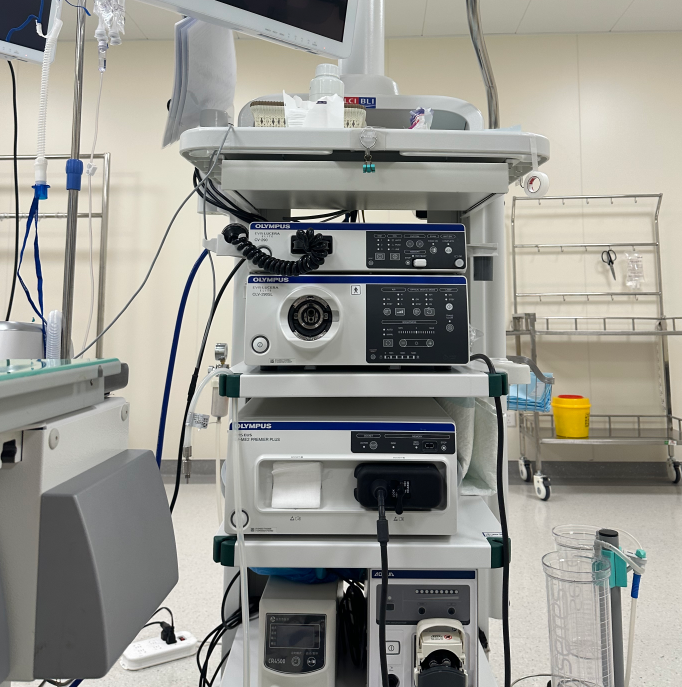
An endoscopy cart should usually hold the video processor, light source, monitor, scope holder, power system, cable management parts, water bottle holder, and optional suction or recording devices. The exact setup depends on the clinical department and procedure type.
How I Match Equipment to Cart Structure
I usually start with the equipment list before I discuss the cart model. This avoids a common mistake: choosing a cart first, then forcing the devices to fit later. Flexible endoscopy systems are not always the same. A GI department may need a processor, light source, monitor, water bottle, and space for daily accessories. A bronchoscopy room may need a clear monitor angle and easier movement around the patient. An ENT clinic may need a smaller footprint and faster access to small tools.
| Equipment | Selection Point | My Practical Check |
|---|---|---|
| Video processor | Shelf size and load | Does the device sit flat and stable? |
| Light source | Ventilation space | Is there enough clearance around it? |
| Monitor | Arm capacity | Can the arm support the screen weight? |
| Scope holder | Position and material | Is the scope protected during use? |
| Cable system | Rear routing | Are cables away from hands and wheels? |
| Power strip | Plug standard | Does it match the export market? |
| Water bottle holder | Side position | Can staff reach it without bending? |
I prefer a cart with adjustable shelf spacing, because buyers often change equipment brands later. For distributors and system integrators, this is important. They may serve different hospitals with different device combinations. A fixed cart may work for one project, but a flexible layout gives more value across many projects.
Why Do Mobility and Cable Management Matter?
A flexible endoscopy cart may look stable in a product photo. But the real test happens when nurses move it, turn it, clean around it, and reconnect devices every day.
Mobility and cable management matter because flexible endoscopy systems rely on frequent movement, safe connection, and clean workflow. Smooth casters, stable structure, proper cable routing, and reachable power points help reduce daily friction and improve procedure efficiency.

What I Check Before I Recommend a Mobile Cart
I always look at movement and cable routing together. A cart with strong shelves but poor wheels is not practical. A cart with smooth wheels but loose cables is also not safe. In many hospitals, flexible endoscopy carts move between examination rooms, storage areas, cleaning areas, or training rooms. During movement, the equipment must stay stable. The cables must not hang near the wheels. The monitor arm must not shake too much. The base must not feel narrow when the cart turns.
| Workflow Issue | Bad Cart Result | Better Cart Feature |
|---|---|---|
| Frequent movement | Device shaking | Stable base and strong casters |
| Tight room space | Hard turning | Practical footprint |
| Many cables | Tangled rear area | Built-in cable routing |
| Power connection | Messy plugs | Integrated power module |
| Monitor adjustment | Poor viewing angle | Adjustable monitor arm |
| Cleaning around cart | Difficult access | Open and organized structure |
I also care about the rear side of the cart. Many buyers only look at the front. But the rear side is where cables, power lines, and device connections become messy. A clean rear layout makes daily work easier. It also makes the cart look more professional when a distributor sells a complete system to a hospital.
How Should I Choose the Right Cart Configuration?
Choosing by price alone feels simple, but it often creates hidden costs. The cart may need changes later, and those changes cost time, money, and trust.
I choose the right cart configuration by confirming the clinical department, equipment list, monitor setup, shelf quantity, accessory needs, mobility level, power standard, and packaging method. A good configuration should match both the current system and future project needs.

My Configuration Checklist for Flexible Endoscopy Buyers
I use a step-by-step method because it reduces mistakes. First, I confirm the use scenario. A GI department, bronchoscopy room, ENT clinic, and mobile training setup do not use the same layout. Second, I confirm the device sizes and weight. Third, I check the monitor requirement. A single monitor arm may be enough for standard use. A dual monitor setup may be needed for teaching, surgery support, or multi-person viewing. Fourth, I check accessories. Scope holders, light guide holders, water bottle holders, side baskets, and cable clips can change the user experience.
| Step | Question I Ask | Why It Helps |
|---|---|---|
| 1 | Which department uses it? | Defines workflow |
| 2 | What devices will be mounted? | Defines shelf layout |
| 3 | What monitor size and weight? | Defines arm choice |
| 4 | Will the cart move often? | Defines caster and base needs |
| 5 | Which power standard is needed? | Supports export projects |
| 6 | Is OEM branding needed? | Supports distributors |
| 7 | Is bulk supply required? | Supports long-term business |
For B2B buyers, I also ask about repeat orders. A one-time hospital order and a distributor product line need different thinking. If the buyer wants long-term supply, the cart should be easy to repeat, easy to package, and easy to adjust for different projects.
What Should I Know About Flexible Endoscope Storage and Workflow?
Many buyers search for carts, but Google also shows storage, drying, transport, and reprocessing questions. This means buyers care about the full flexible endoscopy workflow.
A procedure cart is not the same as an endoscope drying cabinet or storage cabinet. The cart supports equipment use and movement during procedures, while storage and drying systems support safe handling after reprocessing. Buyers should plan both areas together.

Why Storage Questions Still Matter When Choosing a Cart
I do not claim that a procedure cart replaces a drying cabinet or a storage cabinet. That would be the wrong message. Flexible endoscopes need proper handling before and after use. The cart supports the procedure area, but the scope still needs correct reprocessing, drying, transport, and storage based on hospital rules and local guidelines. This is why related questions like “how to store flexible endoscopes” or “how long can flexible endoscopes be stored” often appear near endoscopy cart searches.
| Workflow Stage | Main Equipment | Cart Role |
|---|---|---|
| Procedure setup | Endoscopy cart | Holds devices and monitor |
| During procedure | Cart and accessories | Supports operation workflow |
| Transport | Transport tray or system | Moves scope safely |
| Reprocessing | Cleaning area equipment | Handles cleaning process |
| Drying | Drying cabinet | Supports drying needs |
| Storage | Storage cabinet | Supports protected storage |
A good article should not mix these products together. But a good buyer should understand how they connect. If a hospital only buys a cart and ignores transport or storage, the workflow may still have gaps. If a distributor understands the full workflow, they can sell a stronger system solution.
What Common Mistakes Should Buyers Avoid?
Many mistakes are not obvious in the quotation stage. They appear later, after installation, when staff start using the system every day.
Common mistakes include choosing a cart only by price, ignoring equipment dimensions, using weak monitor arms, forgetting cable routing, choosing poor casters, ignoring cleaning needs, and failing to plan future accessories or OEM changes.

The Mistakes I See Most Often in Projects
The first mistake is choosing a cart before confirming equipment size. This creates shelf problems. The second mistake is ignoring monitor weight. A monitor arm may look strong, but it must match the real screen size and load. The third mistake is poor cable planning. A flexible endoscopy system has many connections, and messy cables make the cart look unprofessional. The fourth mistake is choosing a cart that is too small because it looks neat in a photo. A small cart can become unstable when loaded with real equipment.
| Mistake | Result | Better Choice |
|---|---|---|
| Buying by lowest price | Quality complaints | Compare structure and QC |
| Ignoring device size | Poor equipment fit | Confirm dimensions first |
| Weak monitor arm | Screen shaking | Match arm load rating |
| No cable routing | Messy workflow | Use planned cable channels |
| Poor caster quality | Hard movement | Choose medical-use casters |
| No accessory plan | Future modification cost | Keep modular options |
| No export packaging plan | Damage risk | Use proper export packaging |
For distributors, these mistakes damage customer trust. For OEM buyers, these mistakes hurt brand consistency. For hospitals, these mistakes affect daily workflow. I prefer to solve these points before production, not after delivery.
FAQ About Choosing an Endoscopy Cart for Flexible Systems?
What is an endoscopy cart?
An endoscopy cart is a mobile medical workstation used to hold endoscopy system equipment such as processors, light sources, monitors, power systems, cables, and accessories. I use it to organize the equipment setup and support clinical workflow.
How do I store flexible endoscopes?
Flexible endoscopes should be stored according to the hospital’s infection control rules and the endoscope manufacturer’s instructions. In general, I do not treat a procedure cart as a storage cabinet. Storage should be planned with proper drying, protection, and handling systems.
How long can flexible endoscopes be stored?
The allowed storage time depends on local guidelines, hospital policy, drying conditions, and the storage system used. I suggest buyers follow the endoscope manufacturer and infection control team instead of using one fixed answer for every hospital.
Is it okay to store flexible endoscopes in a basin?
I would not recommend treating a basin as a proper storage solution for flexible endoscopes. A basin does not provide the same controlled protection, drying, tracking, or handling support as dedicated endoscope storage systems.
What type of cart is best for GI and bronchoscopy systems?
For GI and bronchoscopy systems, I prefer a stable multi-layer cart with adjustable shelves, a strong monitor arm, organized cable routing, smooth casters, and accessory holders for scope and light guide support.
Should I choose a standard cart or a customized cart?
I choose a standard cart when the equipment setup is simple and common. I choose a customized cart when the buyer needs special shelf spacing, dual monitors, branded parts, special power standards, or project-based configuration.
Conclusion
I choose flexible endoscopy carts by workflow, not by appearance. A good cart supports devices, movement, cables, storage planning, and long-term B2B supply.

